Water Vapor Fireplace vs. Ethanol Fireplace: Which is the Best Choice for Your Project?
Introduction
When it comes to modern, ventless fireplace solutions, two options dominate the luxury interior market: Water Vapor Fireplaces and Bio-Ethanol Fireplaces. Both offer the beauty of real flames without the need for a chimney, but they operate on completely different technologies.
If you are an architect, hotel developer, or a homeowner, choosing between them can be a challenge. In this guide, we break down the key differences in safety, maintenance, and installation to help you make an informed decision.
1. Technology & Flame Realism
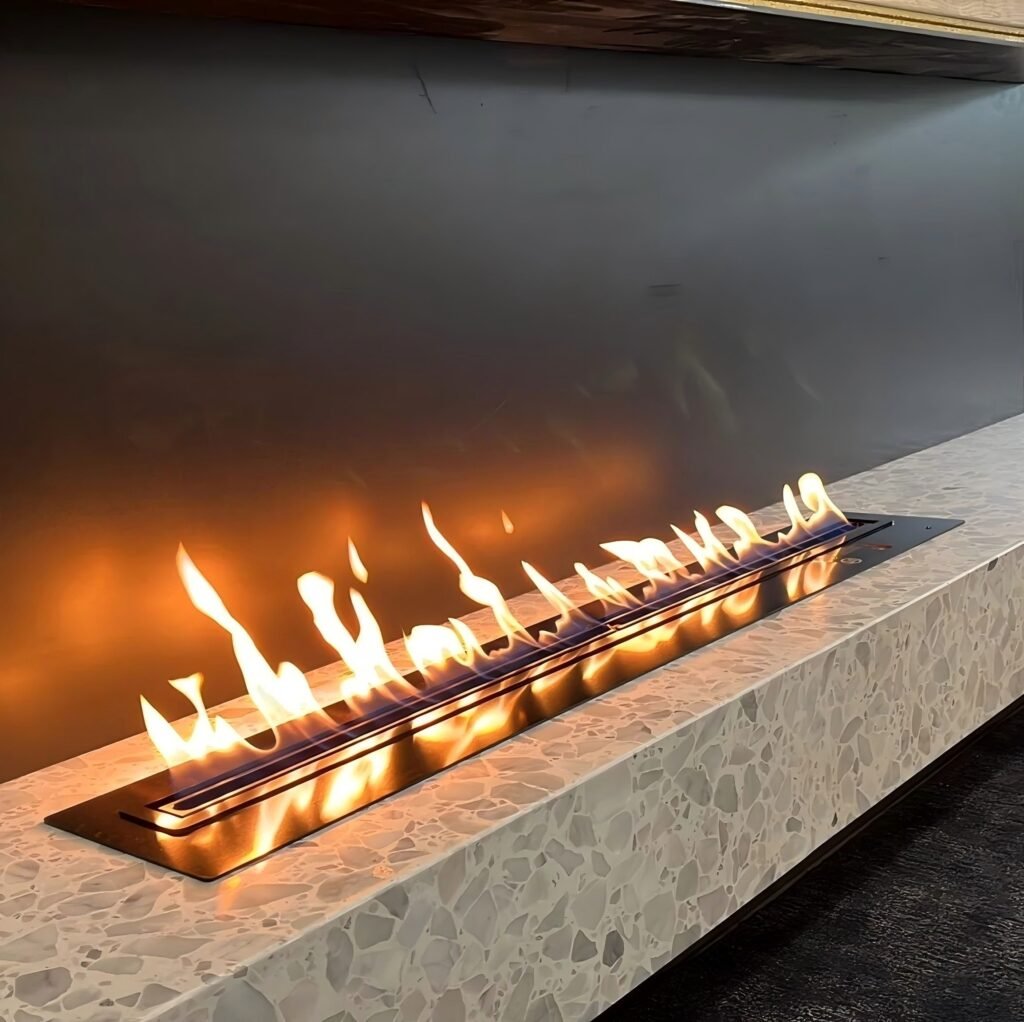
Ethanol Fireplace: Uses bio-ethanol fuel to produce a real, live fire. The flames provide actual heat and a traditional flickering look. However, the flame shape is generally fixed by the burner design.
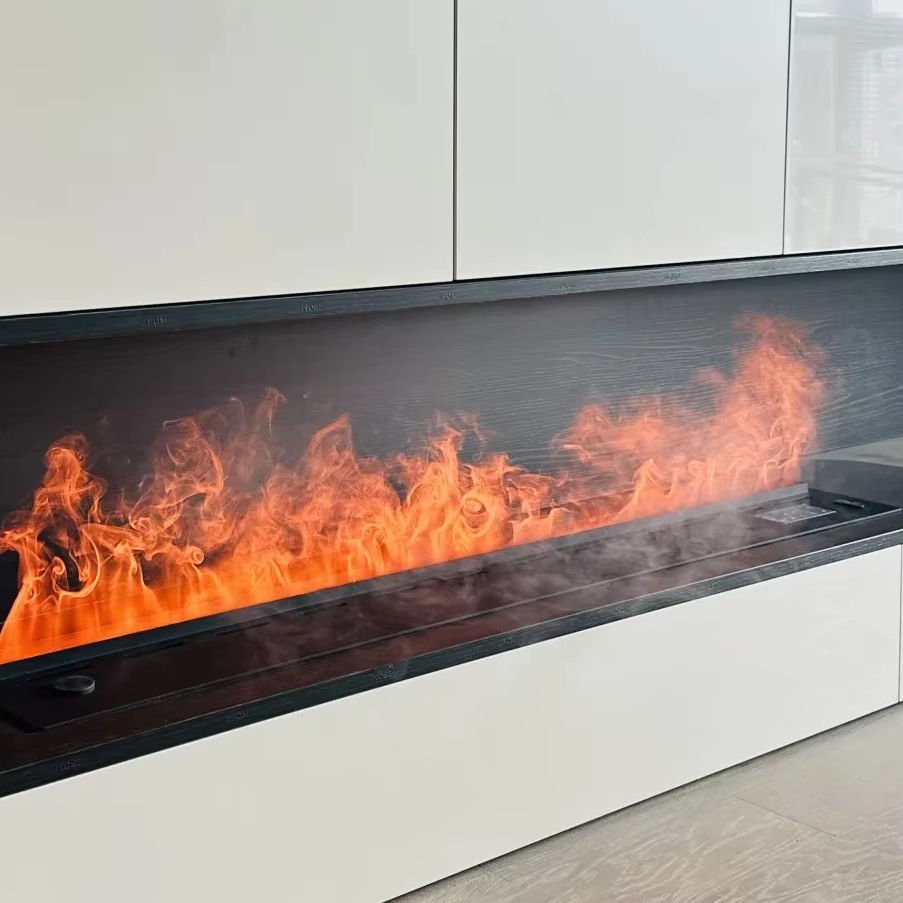
Water Vapor Fireplace: Uses ultrasonic technology to atomize water into a fine mist, illuminated by high-intensity LED lights. This creates a 3D “cold flame” that is indistinguishable from real fire. It offers more flexibility, such as changing flame colors (RGB) via an app.
2. Safety: The “Cold Flame” Advantage
Safety is the biggest differentiator, especially for commercial spaces.
Ethanol: Since it involves real fire and flammable liquid, there is a risk of burns and fire hazards. It consumes oxygen and releases a small amount of $CO_{2}$, requiring adequate ventilation.
Water Vapor: The flames are 100% cold water mist. They are completely safe to touch, making them the ideal choice for families with children, pets, and high-traffic public areas like hotel lobbies or restaurants. No $CO_{2}$ is produced; instead, it acts as a gentle humidifier.
3. Installation & Requirements
| Feature | Ethanol Fireplace | Water Vapor Fireplace |
| Venting | Ventless (but needs air circulation) | Ventless (completely safe) |
| Gas/Fuel Lines | No | No |
| Electrical | Not required for manual models | Required (110V-240V) |
| Plumbing | No | Optional (for auto-fill models) |
4. Operational Costs & Maintenance
Ethanol: Bio-ethanol fuel can be expensive over time. A standard burner may cost $2 – $5 per hour to operate depending on fuel prices.
Water Vapor: Extremely low running costs. It only requires tap water (or filtered water) and a small amount of electricity. Maintenance is limited to cleaning the ultrasonic transducers periodically to prevent mineral buildup.
5. Environmental Impact
If you are aiming for a Green Building or Sustainable Design, the water vapor fireplace is the winner. It has zero emissions, zero carbon footprint, and consumes significantly less energy than any combustion-based fireplace.
Conclusion: Which One Should You Choose?
Choose an Ethanol Fireplace if: You need supplemental heat and want the traditional feel of a real, burning fire where safety regulations allow.
Choose a Water Vapor Fireplace if: You prioritize safety, zero-maintenance, and modern smart features. It is the superior choice for luxury hotels, commercial projects, and families who want the ambiance of fire without the risk.
Looking for a Custom Solution?
At Xelecwfire, we specialize in manufacturing high-quality, certified water vapor fireplaces. Whether you need a 1-meter insert or a 5-meter custom wall installation, we provide the CAD support and technical expertise you need.
👉 [Contact us today for a Free Quote and Catalog] or WhatsApp us at +86 15280850785.